

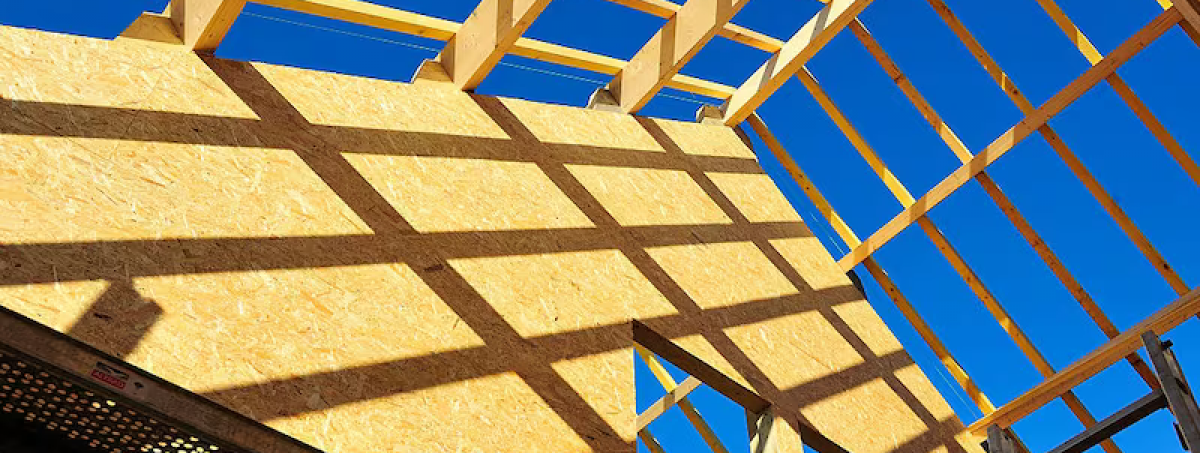
Public procurement has long shaped construction markets more decisively than any planning framework or skills campaign. Ireland has now recognised that logic explicitly. A seven-point roadmap submitted to cabinet on 10 June 2026 by the interdepartmental Timber in Construction Steering Group places a Wood-First strategy, led by the Office of Public Works, at the centre of Ireland's plan to build 300,000 homes by 2030 and meet mandatory carbon intensity targets from the same year. The report draws on two years of collaboration across 64 institutions and organisations. Its ambition is clear. Whether procurement systems can operationalise that ambition is the question that will determine whether timber moves from policy aspiration to construction default.
The scale of the opportunity is not in doubt. Ireland's roundwood production is forecast to climb from 5 million to 7.8 million cubic metres by 2035, backed by more than €4.3 billion in state and EU forestry investment since the 1980s. Yet fewer than 50% of Irish engineering and architecture lecturers have engaged with industry bodies on engineered timber, and the country's construction sector remains weighted heavily toward concrete and steel. Scotland, by comparison, has reached a 90% timber frame share in scheme housing. The gap between Irish supply capacity and Irish construction practice is not a market failure. It is a procurement failure, and the OPW-led Wood-First strategy is the mechanism designed to close it.
The evidence from comparable jurisdictions confirms that procurement levers move markets. France and Scotland, both cited in the steering group report, shifted timber into the construction mainstream through public sector demand signals before private sector uptake followed. Since September 2025, Irish public bodies have been required to conduct whole-life carbon assessments for directly procured construction projects, and the report calls for those requirements to be tightened further from June 2026.
Three specific procurement actions would translate the roadmap's intent into measurable outcomes. First, the OPW should publish a Wood-First implementation guide for contracting authorities by the end of 2026, establishing the technical and economic thresholds against which a departure from timber must be justified, preventing the comply-or-explain mechanism from becoming a default exemption route. Second, the Office of Government Procurement should develop a central framework agreement for mass engineered timber supply, reducing the procurement burden on individual contracting authorities and aggregating demand sufficiently to support domestic CLT and glulam producers at scale. Third, whole-life carbon assessment data from public construction projects should be published centrally and used to benchmark timber against concrete and steel on an ongoing basis, creating the evidence base that procurement professionals need to defend material choices at tender stage.
The steering group's report is a credible policy foundation. Ireland's forests, its investment commitments, and its housing targets are all aligned. The task now is ensuring that procurement frameworks are designed to pull timber through the system rather than leaving that work to individual contracting authorities acting without coordinated guidance.
(The views expressed by the writer are his/her own and do not necessarily reflect the views or positions of BusinessRiver.)











.png)